

If you’re building a new home, developing acreage, or replacing an existing septic system in the Sterling area, the decisions made before excavation begins can have a major impact on how well your new system performs.
A septic system is more than a tank buried in the ground. It is a complete onsite wastewater treatment system designed around your home, property, soil conditions, wastewater needs, and applicable local requirements. That means two properties located only a short distance apart may require different solutions.
For homeowners researching septic installation in Sterling CO, understanding this process before work begins can make the project much easier to navigate.
At South Platte Septic, septic installation is one of our core specialties. We provide septic installation, repair, and replacement throughout northeastern Colorado and western Nebraska, including Sterling and surrounding Logan County properties.
This guide explains what Sterling-area homeowners should know about planning a new septic system, including site evaluation, soil conditions, system design, permitting, installation, cost considerations, and choosing the right contractor.
For a broader explanation of how septic systems function, our Complete Guide to Septic System Installation walks through the fundamentals. Here, we’re taking a closer look at considerations for homeowners in Sterling and Logan County.
Septic Installation Starts With Your Property
One of the most important things to understand about septic installation is that the property helps determine the system.
Before choosing a tank or deciding where a drain field should go, the site itself needs to be evaluated.
The location of the home matters, but so do wells, property boundaries, driveways, buildings, utilities, slopes, drainage patterns, and the amount of suitable space available for wastewater treatment.
Future plans deserve consideration too.
If you expect to build a shop, garage, home addition, driveway, or another structure later, discussing those plans before septic installation can prevent conflicts. The location you have in mind for a future improvement may also be valuable space for the wastewater treatment system.
This is especially relevant on rural properties around Sterling. A large acreage may appear to offer unlimited room, but septic components still need to satisfy applicable site, design, and setback requirements.
Good planning considers the entire property rather than treating the septic system as an isolated project.
Why Soil Matters in Septic System Design
Soil is not simply something that must be excavated to make room for a septic system. It performs an important role in wastewater treatment.
In a typical septic system, wastewater first enters the tank, where solids and liquids separate. Liquid effluent then moves into a soil treatment area, commonly called a drain field or leach field, where the soil provides additional treatment.
Because of that role, soil characteristics can directly influence septic design.
The type and depth of suitable soil, site drainage, groundwater considerations, restrictive layers, and other conditions may affect the amount and configuration of treatment area required.
This is why copying a neighbor’s septic system is not necessarily appropriate.
Even properties located near one another can have different site and soil characteristics. A design that works well on one property may not be the correct solution for the next.
Professional site evaluation allows the system to be designed around the conditions actually present rather than assumptions about what should work.

Understanding Colorado Septic Requirements
Colorado generally refers to septic systems as On-site Wastewater Treatment Systems, or OWTS.
The Colorado Department of Public Health and Environment explains that OWTS in the state are governed by Regulation 43. Systems with design capacities of 2,000 gallons per day or less are generally permitted through local public health agencies under locally adopted requirements that must meet applicable state standards.
For Sterling and Logan County property owners, the important takeaway is simple: septic installation requires more than hiring someone to excavate and place a tank.
The system needs to be properly planned, permitted, installed, and inspected according to the requirements that apply to the property.
These requirements exist for an important reason. A septic system treats wastewater on the same property where it is generated. Appropriate system design, soil treatment, setbacks, and installation practices help protect public health, groundwater, wells, neighboring properties, and the long-term usability of the site.
Permitting should therefore be treated as part of the installation process rather than an obstacle to it.
Planning Septic for New Construction
If you’re building a new home outside municipal sewer service, start planning the septic system early.
Waiting until the home is nearly complete can unnecessarily restrict your options.
Early planning allows the septic system to be coordinated with the house, well, driveway, utilities, outbuildings, and other site improvements. It also gives you a more realistic construction timeline by accounting for evaluation, design, permitting, installation, and inspection.
This is particularly useful for custom homes and acreage development where the property owner may have flexibility in determining where infrastructure is located.
A septic system should not be squeezed into whatever portion of the property remains after every other decision has been made. It is essential infrastructure and deserves a place in the site plan from the beginning.
Replacing an Existing Septic System in Sterling
Not every septic installation is associated with a new home.
Older systems can deteriorate, treatment areas can develop problems, property needs can change, and there are situations where continued repair no longer represents the best long-term solution.
Replacement projects require a different approach because the property already contains wastewater infrastructure.
The location and condition of the existing tank, piping, treatment area, home, utilities, landscaping, driveways, and other improvements can all influence the replacement design.
Importantly, a septic problem does not automatically mean replacement is necessary.
A professional evaluation should first determine what is wrong and whether repair is practical. When replacement is the better solution, the goal should not simply be to recreate the old system. It is an opportunity to install a system appropriate for the property’s current conditions and needs.
How Septic System Size Is Determined
Septic sizing is more complicated than choosing a tank based solely on the physical square footage of a house.
Residential wastewater design considers anticipated flow and occupancy-related factors. The number of bedrooms is commonly important because it provides a basis for estimating the potential wastewater demand of a home.
This remains relevant even if only one or two people currently occupy the property.
The system needs to serve the capacity of the home rather than only today’s household.
The soil treatment area also needs to be appropriately sized based on the design flow, soil characteristics, and system being used.
The tank, distribution components, and treatment area ultimately need to function together as one wastewater treatment system.
Choosing the Right Septic System for the Site

Not every Sterling-area property requires the same septic design.
For some sites, a conventional gravity-based system may be appropriate. Other properties may require different distribution methods or system configurations because of elevations, soil conditions, property limitations, or applicable requirements.
Elevation is particularly important because wastewater must move from the home through the treatment system as the design intends. Where gravity alone cannot accomplish that, additional components may be required.
Existing properties can present additional challenges because homes, wells, garages, shops, fences, driveways, utilities, and landscaping may reduce the available installation area.
New construction generally offers greater flexibility, which is another reason early septic planning is valuable.
For property owners considering septic installation in Sterling, CO, the appropriate system should begin with the site rather than a one-size-fits-all design.
What Happens During Septic Installation?
Once evaluation, design, and required approvals are complete, the physical installation can begin.
The site is prepared so equipment and materials can safely reach the work area. Excavation is completed for the septic tank, piping, distribution components, and soil treatment area according to the approved design.
The tank must be placed at the appropriate location and elevation, properly connected, and positioned so necessary access remains available for future service.
The soil treatment area is then constructed according to the design so wastewater can be distributed appropriately through the treatment system.
Installation requires attention to elevations, dimensions, connections, and the condition of the receiving soil. Unnecessary soil compaction or disturbance in the treatment area should be avoided because the soil itself performs an important treatment function.
Before critical components disappear underground, required inspections can verify that the installation corresponds with the approved design and applicable requirements.
After approval and completion, the site can be backfilled and graded as appropriate.
What Will the Property Look Like After Installation?
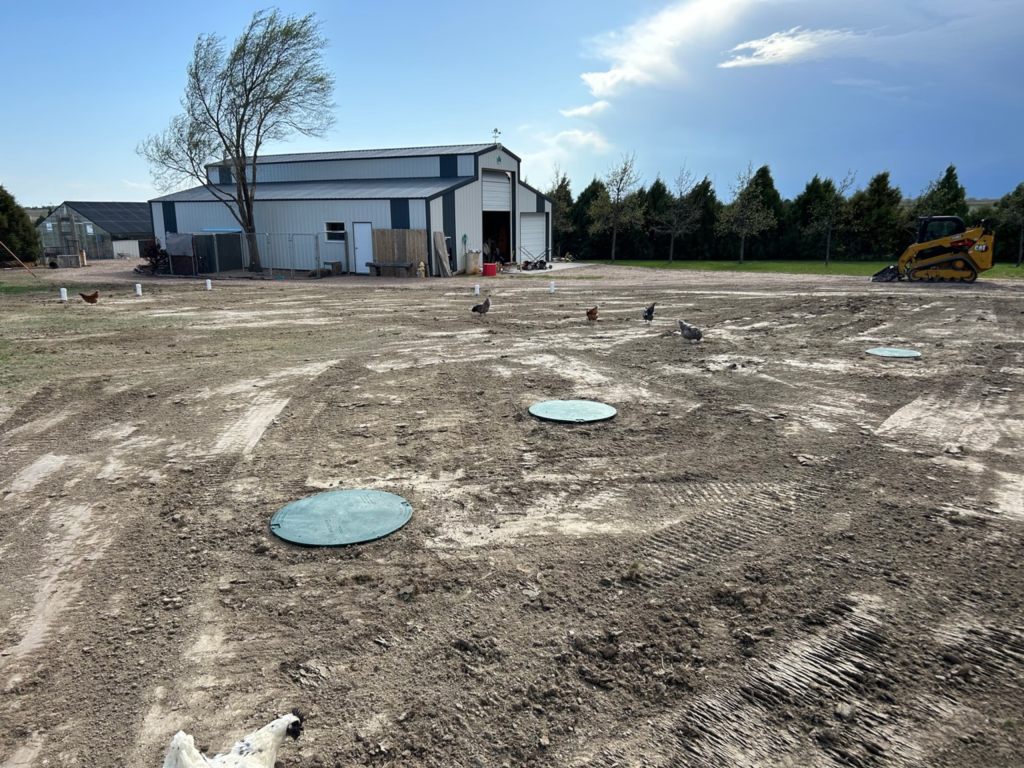
Septic installation is a construction project, so some property disturbance should be expected.
An undeveloped building site may already be undergoing substantial excavation. Replacement work at an occupied home can be more noticeable because established vegetation or portions of the yard may need to be disturbed.
The amount of restoration depends on the property and scope of work.
After installation, one of the most valuable things a homeowner can do is understand where the system is located.
Know the location of the tank, access points, piping, and treatment area. Keep system documentation with your property records.
Before adding a driveway, shop, garage, fencing, landscaping, or another improvement, consider whether it could interfere with the septic system.
Underground does not mean unimportant. Your septic system becomes permanent infrastructure for the property.
How Much Does Septic Installation Cost in Sterling?
There is no single price that accurately represents every septic installation.
Two similar homes in the Sterling area can require different systems because their properties have different soil, access, elevations, layouts, treatment requirements, or existing infrastructure.
Cost can be affected by the required system design, tank and components, treatment area, excavation, property access, site preparation, permitting-related requirements, and restoration.
Replacement projects may involve additional considerations because an existing system and developed property must be accounted for.
This is why generic national septic prices found online are of limited value when budgeting for a specific Logan County property.
A site-specific estimate provides much better information.
Homeowners should also look beyond the initial price. A septic system is long-term infrastructure, and cutting corners on planning, materials, installation, or system design can become expensive if those choices contribute to future problems.
For homeowners who prefer to consider payment options, South Platte Septic provides access to a third-party provider where qualified applicants can explore personal loan offers up to $100,000. Eligibility, rates, terms, and available offers are determined by the financing provider.
Comparing Septic Installation Estimates
When comparing contractors, do not look only at the bottom-line price.
First determine whether the estimates actually represent the same scope of work.
Ask what system is being proposed and why. Understand what work is included, what site conditions could create additional expense, how permitting is handled, what restoration is included, and what you should expect during installation.
A lower estimate may represent excellent value—or it may simply include less.
The only way to know is to understand what you’re comparing.
A septic contractor should be willing to explain the proposed project in terms you can understand. You do not need to become an onsite wastewater expert, but you should know what is being installed on your property and why the proposed solution makes sense.
Why Professional Septic Qualifications Matter
Installing a septic system involves much more than operating excavation equipment.
Onsite wastewater work combines site evaluation, soil considerations, wastewater treatment, system components, regulations, construction practices, and long-term property planning.
South Platte Septic has invested in industry education and holds certifications associated with Colorado Professionals in Onsite Wastewater, the National Association of Wastewater Technicians, and the Nebraska On-Site Waste Water Association.
We are also a BBB Accredited Business, giving homeowners an independent resource for reviewing our business profile and accreditation.
Credentials should not be the only factor when selecting a contractor. Regional experience, communication, reputation, quality of work, and a willingness to answer questions matter as well.
The goal is to choose someone who understands the complete wastewater system rather than simply the excavation required to bury it.
Caring for Your New Septic System
A professional installation provides the foundation for long-term performance, but homeowners influence what happens afterward.
Use water responsibly and correct leaking fixtures. Keep wipes, grease, hygiene products, and other inappropriate materials out of household drains. Protect the soil treatment area from heavy vehicles, construction, and unnecessary compaction.
Routine maintenance is important as well. South Platte Septic specializes in installation, repair, and replacement rather than routine septic pumping, but solids still need to be removed from septic tanks by a qualified pumping provider when appropriate.
The EPA’s SepticSmart homeowner resources provide useful guidance for understanding and caring for an onsite wastewater system.
Learning good septic habits when the system is new is much easier than trying to correct years of improper use later.
Frequently Asked Questions About Septic Installation in Sterling, CO
Do I need a permit for a septic system in Sterling or Logan County?
Yes. Septic installations are subject to applicable Colorado and local OWTS requirements. The specific process depends on the property and proposed system. Planning for permitting early helps prevent it from becoming a last-minute issue in your construction schedule.
How long does septic installation take?
There is no universal timeline. The physical installation may be relatively quick once construction begins, but site evaluation, design, permitting, inspection scheduling, weather, and property conditions all contribute to the overall project timeline. New construction projects should begin septic planning early.
Can I choose where my septic system is installed?
Your preferences can be considered, but soil conditions, setbacks, wells, buildings, utilities, property boundaries, topography, and available treatment area may limit suitable locations. Future building plans should also be discussed before the system layout is finalized.
Can I drive over my new drain field?
The soil treatment area should be protected from inappropriate vehicle traffic, construction, and other activities that could damage components or compact the soil. Knowing where the drain field is located helps prevent accidental damage.
How long will a new septic system last?
There is no single lifespan that applies to every system. Design, installation quality, system components, soil conditions, household wastewater use, maintenance, and treatment-area protection all influence longevity. Properly caring for the system can help maximize its useful service life.
Does South Platte Septic provide septic pumping?
South Platte Septic specializes in septic installation, septic repair, and septic replacement. We do not currently provide routine septic pumping. Homeowners should use a qualified pumping provider for that maintenance service when needed.
Planning Septic Installation in Sterling, CO?

Whether you’re building a home, developing rural acreage, or replacing an existing system, good septic installation begins before the excavator arrives.
Understand the property. Plan around the soil and site conditions. Consider future improvements. Follow the applicable permitting process. Ask questions about the proposed system and understand what your estimate includes.
Most importantly, choose a solution designed for your property rather than assuming every septic installation should look the same.
South Platte Septic specializes in septic installation, repair, and replacement throughout northeastern Colorado and western Nebraska, including Sterling and surrounding Logan County properties.
If you’re researching Septic Installation Sterling CO because you have a project coming up, contact South Platte Septic for a free quote. Tell us about your property, what you’re building or replacing, and what you know about the site so we can help you determine the next step.
Your septic system may spend most of its life underground and out of sight, but it should never be an afterthought. Plan it carefully, install it correctly, and protect it for the future.